Wildlife Fencing
DOT highway wildlife exclusion fencing and crossing structures that reduce animal-vehicle collisions and protect migration corridors.
Animal-vehicle collisions kill over 300 Americans each year and cause $8 billion in property damage. State DOTs across the US are investing heavily in wildlife exclusion fencing and crossing structures — and they need contractors who understand both the engineering and the ecology. Ideal Fencing Corp installs FHWA-compliant wildlife fencing systems across Colorado, Washington, Oregon, Idaho, Montana, Utah, New Mexico, Kansas, Wyoming, Kentucky, Tennessee, Ohio, and Nebraska, working alongside DOT biologists and environmental consultants to protect migration corridors while keeping drivers safe.
Wildlife Fencing Systems
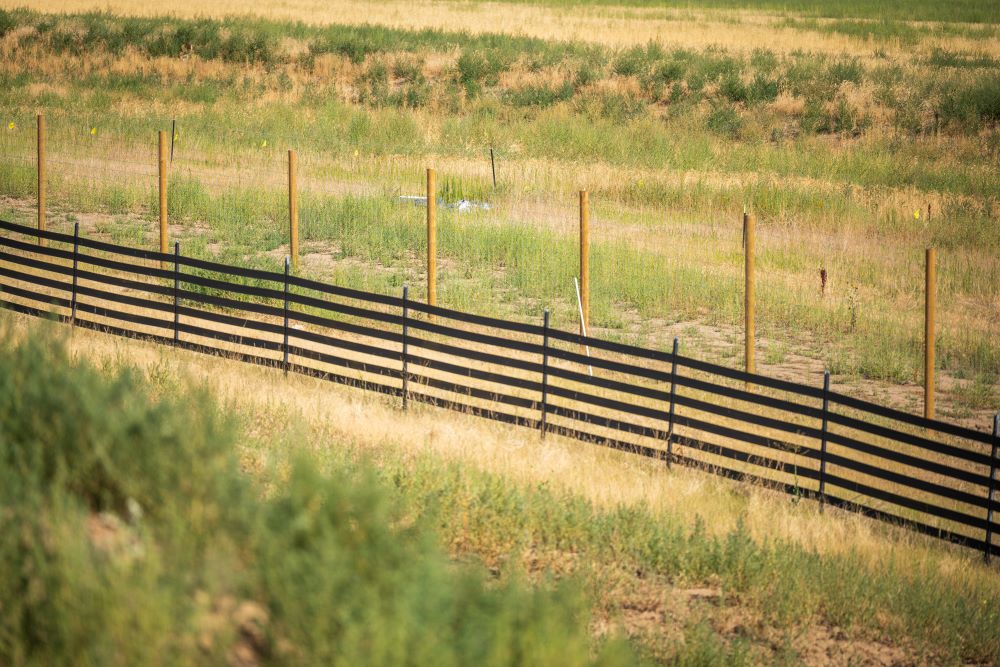
**Ungulate Exclusion Fencing**: 8-foot woven wire mesh designed to exclude deer, elk, moose, and pronghorn from highway rights-of-way. Bottom aprons prevent animals from digging under, and rigid panels at the base deter smaller wildlife. We install these systems along highway corridors from 1 to 20+ miles, typically in conjunction with wildlife crossing structures.
**Wildlife Crossing Structure Fencing**: Wing fencing and funnel fencing that guides animals toward underpasses, overpasses, and culvert crossings. Proper alignment and offset distances are critical — we coordinate with project biologists to ensure fence geometry channels animals effectively.
**Small Mammal and Amphibian Fencing**: Smaller mesh and solid panel systems for species-specific exclusion. Used at sensitive habitat crossings, wetland areas, and designated habitat corridors.
**Drift Fencing and Jump-Outs**: One-way escape ramps that allow animals trapped on the road side to exit the right-of-way without creating a re-entry point. We build concrete and earthen jump-out structures per FHWA design guidelines.
Why DOTs Choose Ideal Fencing
Wildlife fencing is not standard fencing installed in a remote location. It requires understanding of animal behavior, coordination with environmental agencies, seasonal construction windows (avoiding nesting and migration periods), and specialized materials that withstand the forces of a 600-pound elk hitting the fence line. Our crews have installed wildlife exclusion systems along I-25 in Colorado, US-97 in Oregon, US-93 in Idaho, and multiple corridors in Washington and Utah.
We carry the DBE certification and DOT contractor approvals that state agencies require. Our project managers attend pre-construction coordination meetings with biologists, maintain daily environmental compliance logs, and produce the photo documentation and as-built records that federal-aid projects demand.
FHWA and State DOT Compliance
All wildlife fencing installations comply with the FHWA Wildlife Crossing Structure Handbook (FHWA-HIF-23-035) and applicable state DOT specifications. We maintain current knowledge of CDOT, WSDOT, ODOT, ITD, MDT, UDOT, NMDOT, KDOT, WYDOT, KYTC, TDOT, ODOT (Ohio), and NDOT (Nebraska) wildlife fencing standards, which vary by state. Our engineering team produces design drawings that meet both federal guidelines and state-specific requirements.
Project Scale and Coordination
Wildlife fencing projects are typically multi-mile installations coordinated with heavy civil contractors, bridge builders, and environmental monitors. Our project managers integrate with prime contractor schedules and manage our scope within the larger project CPM. We understand that our work often gates other activities — and we plan accordingly to protect the critical path.
Typical wildlife exclusion fencing projects range from $30 to $65 per linear foot for standard ungulate exclusion fence, with crossing structure fencing, jump-outs, and specialty systems priced per plan. Multi-mile projects benefit from mobilization efficiencies and volume material pricing.
Ready to Start Your Project?
Get a free, no-obligation quote from our team of commercial fencing and guardrail experts.
Key Features
- 8-foot ungulate exclusion fencing per FHWA guidelines
- Wing and funnel fencing for crossing structures
- Jump-out escape ramps for trapped animal egress
- Small mammal and amphibian exclusion systems
- Bottom aprons and rigid base panels for dig prevention
- DBE certified and DOT approved contractor
- Environmental compliance logging and documentation
- Seasonal construction window management
Applications
Technical Specifications
| Exclusion Fence Height | 8 ft standard for ungulates |
| Mesh Type | Woven wire, welded wire, or chain link per spec |
| Bottom Apron | 24-inch buried apron standard |
| Post Spacing | 10 ft to 16.5 ft on center per design |
| Compliance | FHWA-HIF-23-035 and state DOT specs |
| Lifespan | 20 to 30 years with proper maintenance |
Frequently Asked Questions
Request a Free Quote
We'll review your project and respond within 2 business hours.