Temporary Barriers
Work zone barriers including water-filled barriers, temporary concrete barrier, and channelizing devices for construction zone safety.
Work zone crashes injure over 37,000 people and kill over 800 annually in the United States. The barrier systems that separate work zones from live traffic are not optional equipment — they are the primary physical protection for workers and motorists. Ideal Fencing Corp supplies, installs, and manages temporary barrier systems for highway construction projects across Colorado, Washington, Oregon, Idaho, Montana, Utah, New Mexico, Kansas, Wyoming, Kentucky, Tennessee, Ohio, and Nebraska. We handle the logistics so your project team can focus on building.
Temporary Barrier Systems
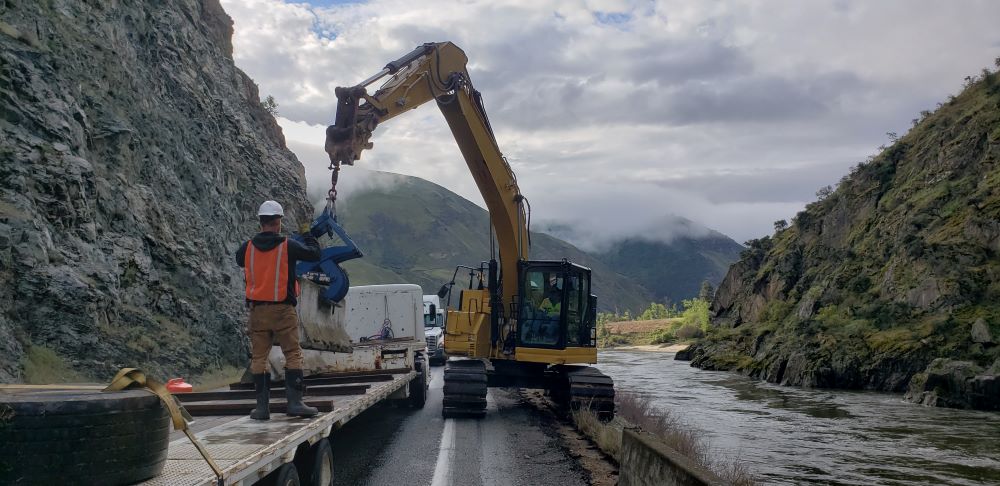
**Temporary Concrete Barrier (TCB)**: Precast concrete segments connected with steel pins to form continuous barrier runs. The highest level of work zone protection — TCB stops vehicles without deflecting into the work zone. We maintain an inventory of New Jersey shape and F-shape segments in 12.5-foot and 20-foot lengths. Crane-placed at rates of 50 to 100 segments per day.
**Water-Filled Barriers**: Lightweight plastic barriers filled with water on site for ballast. Used for lower-speed work zones, pedestrian channelization, and temporary traffic separation. Brands include Energite III, TrafFix Water-Wall, and Yodock barriers. Deployed by hand at placement rates of 200 to 400 feet per hour.
**Sand-Filled Barriers**: Similar to water-filled barriers but filled with sand for increased mass and stability. Used in freezing conditions where water-filled barriers would ice and crack. Common in our Colorado, Idaho, Utah, and Kansas winter operations.
**Longitudinal Channelizing Devices (LCDs)**: Low-profile delineation barriers that separate opposing traffic in low-speed work zones. Not designed for vehicle impact — used for visual channelization and pedestrian guidance. Deployed for urban construction zones, utility work, and sidewalk closures.
Work Zone Barrier Management
We do not just drop off barriers and leave. Our work zone barrier service includes project-duration management: initial placement, phased repositioning as the work progresses, emergency repairs after vehicle impacts, and final removal and cleanup. Our project managers coordinate barrier layout changes with your construction superintendent, ensuring barrier moves happen on schedule without delaying other trades.
For long-duration projects, we perform weekly barrier inspections — checking pin connections, segment alignment, reflective sheeting condition, and end treatment integrity. Impact-damaged segments are replaced within 24 to 48 hours.
Emergency and Rapid Deployment
When a work zone is breached, a barrier is struck, or an emergency lane closure is needed, our crews respond within 4 to 24 hours depending on location. We maintain pre-staged barrier inventory at our Erie headquarters and regional storage yards. Emergency barrier deployment has supported incident response on I-25, I-70, I-5, I-84, I-15, and I-40 across our service territory.
MUTCD and DOT Compliance
All temporary barrier installations comply with the Manual on Uniform Traffic Control Devices (MUTCD) Part 6 and applicable state DOT work zone safety specifications. Barrier selection, placement, and end treatment are per the state-specific temporary traffic control manual. We verify that every installation meets the minimum length, offset, and taper requirements specified in the approved traffic control plan.
Pricing
Temporary concrete barrier rental and placement ranges from $15 to $35 per linear foot per month, including delivery, crane placement, pin connection, and removal. Water-filled barrier rental runs $8 to $18 per linear foot per month. Sand-filled barriers cost $10 to $22 per linear foot per month. Emergency mobilization premiums apply for response within 24 hours. All pricing includes equipment, labor, and project-duration management.
Ready to Start Your Project?
Get a free, no-obligation quote from our team of commercial fencing and guardrail experts.
Key Features
- Temporary concrete barrier in 12.5 ft and 20 ft segments
- Water-filled barriers for low-speed work zones
- Sand-filled barriers for freezing-condition operations
- Project-duration barrier management and repositioning
- Weekly barrier inspection and impact repair service
- 24-48 hour emergency deployment capability
- MUTCD Part 6 compliant installations
- Barrier inventory at regional staging yards
Applications
Technical Specifications
| TCB Segments | 12.5 ft and 20 ft, New Jersey and F-shape |
| Water-Filled | 42 in height, 24 in width, 1,500+ lbs filled |
| Sand-Filled | 42 in height, 24 in width, 2,000+ lbs filled |
| Connections | Steel pin-and-loop (TCB), tongue-and-groove (plastic) |
| Placement Rate | 50-100 TCB segments/day, 200-400 ft/hr (plastic) |
| Compliance | MUTCD Part 6, state DOT TCP specifications |
Frequently Asked Questions
Request a Free Quote
We'll review your project and respond within 2 business hours.