High-Tension Cable Barrier
Median cable barrier systems for divided highways that prevent cross-median crashes at a fraction of the cost of rigid barrier systems.
Cross-median crashes are among the deadliest highway accident types — a vehicle crossing a divided highway median into oncoming traffic has a fatality rate over 10 times that of a run-off-road crash. High-tension cable barrier systems stop this by catching and redirecting vehicles within a narrow deflection zone. Ideal Fencing Corp installs MASH-tested cable barrier systems across Colorado, Washington, Oregon, Idaho, Montana, Utah, New Mexico, Kansas, Wyoming, Kentucky, Tennessee, Ohio, and Nebraska, where state DOTs have deployed hundreds of miles of cable barrier on divided highways.
Cable Barrier Systems
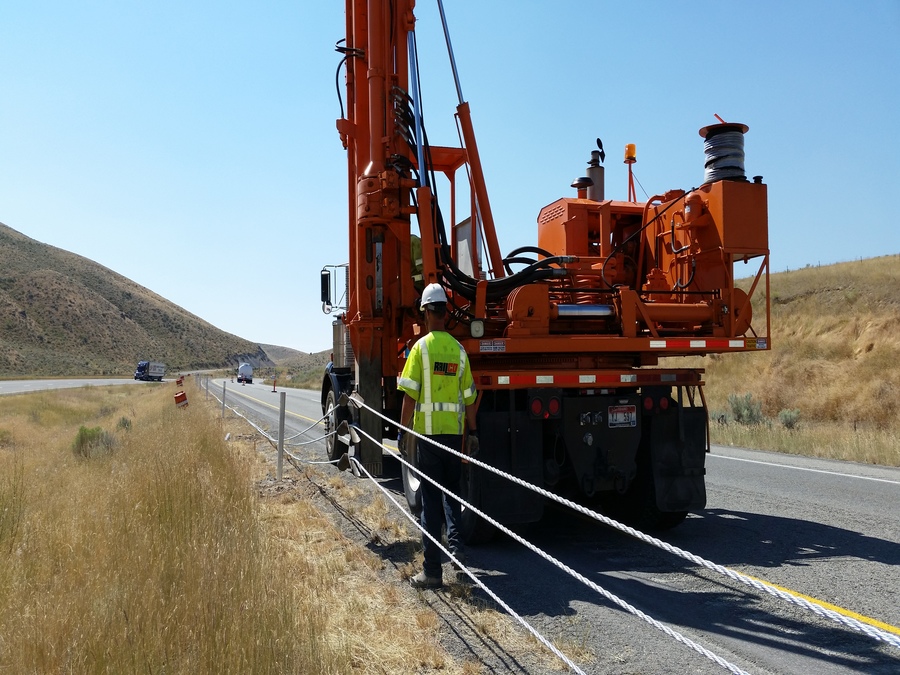
We install three-cable and four-cable high-tension systems from approved manufacturers including Trinity Highway (CASS), Brifen, Gibraltar, and Nucor Skyline. Each system uses high-strength steel cables tensioned to 2,000 to 5,000 pounds per cable, supported by frangible steel posts designed to release on impact. The cables absorb and distribute impact energy over a longer distance than rigid barriers, reducing occupant deceleration forces.
**Three-Cable Systems**: The most widely specified median cable barrier in Western DOTs. Three cables at varying heights capture both passenger vehicles and light trucks within a 6 to 12 foot dynamic deflection zone.
**Four-Cable Systems**: Enhanced capture capability with a tighter deflection envelope. Specified for medians as narrow as 16 feet where reduced deflection is critical.
Where Cable Barrier Excels
Cable barrier is the preferred median barrier solution for divided highways with medians 16 to 60 feet wide. It costs significantly less than rigid barrier systems per linear foot, requires less earthwork, and can be installed at much higher production rates. State DOTs in our territory have installed cable barrier on I-25, I-70, I-76, and US-36 in Colorado; I-5, I-90, and SR-18 in Washington; I-5 and US-97 in Oregon; I-84 and I-15 in Idaho; I-15 and I-80 in Utah; I-25 and I-40 in New Mexico; and I-70, I-35, and US-69 in Kansas. Adarand Constructors performs cable barrier installation and maintenance across Colorado as part of their CDOT-approved services, while RailCo LLC handles cable barrier work throughout Idaho and the Northwest.
Cable barrier is also snow-plow friendly — posts flex and release rather than damaging plow blades, and the low cable profile allows snow to drift through rather than accumulating against a solid barrier face.
Installation Production
Our cable barrier crews install 2,000 to 4,000 feet per day depending on terrain and median conditions. We own our post driving equipment, cable tensioning tools, and splice hardware — no subcontracted critical-path equipment. A typical 10-mile cable barrier project takes 15 to 25 working days from mobilization. We coordinate lane closures and traffic control plans to minimize impact to traveling public.
Maintenance and Repair
Cable barrier requires periodic maintenance: cable tension verification, post replacement (posts are designed to break on impact), and cable splice repair after vehicle impacts. We offer maintenance contracts that include quarterly tension checks, impact damage repair within 24 to 48 hours, and annual condition reporting. Our repair crews carry inventory of posts, cables, and hardware to minimize response time.
DOT Specification and Testing
All cable barrier systems we install are MASH TL-3 or TL-4 tested per the specific state DOT approved products list. We maintain installation certifications from each manufacturer and ensure our installers have completed manufacturer-required training programs. As-built documentation includes cable tension logs, post spacing verification, terminal anchor inspections, and material certifications.
Investment
High-tension cable barrier typically costs $12 to $28 per linear foot installed — significantly less than W-beam ($22-$45/ft) or rigid barrier systems. End anchors run $3,500 to $8,000 per unit. The cost advantage makes cable barrier the preferred choice for DOTs maximizing safety improvements within fixed budgets.
Ready to Start Your Project?
Get a free, no-obligation quote from our team of commercial fencing and guardrail experts.
Key Features
- MASH TL-3 and TL-4 tested cable barrier systems
- Three-cable and four-cable configurations
- Frangible posts designed to release on impact
- Snow-plow compatible design
- 2,000 to 4,000 linear feet installed per day
- 60-75% cost savings versus rigid barrier systems
- 24-48 hour impact damage repair service
- Quarterly tension verification programs
Applications
Technical Specifications
| Cable Count | 3-cable or 4-cable systems |
| Cable Tension | 2,000 to 5,000 lbs per cable |
| Post Spacing | 16 ft on center (typical) |
| Dynamic Deflection | 6 to 12 ft (3-cable), 4 to 8 ft (4-cable) |
| Minimum Median Width | 16 ft (4-cable), 24 ft (3-cable) |
| Test Level | MASH TL-3 or TL-4 |
Frequently Asked Questions
Request a Free Quote
We'll review your project and respond within 2 business hours.