Bridge Rail
Concrete and steel bridge railing systems, retrofit upgrades, and bridge-to-guardrail transitions for DOT bridge projects.
Bridge rails are not guardrails — they are structural elements of a bridge that must contain vehicles at highway speed while maintaining the structural integrity of the bridge deck and superstructure. Ideal Fencing Corp installs and retrofits concrete and steel bridge railing systems across Colorado, Washington, Oregon, Idaho, Montana, Utah, New Mexico, Kansas, Wyoming, Kentucky, Tennessee, Ohio, and Nebraska. Our bridge rail work ranges from new construction installations on bridge deck pours to retrofit upgrades that bring aging bridge rails up to current MASH standards.
Bridge Rail Systems
**Concrete Bridge Rail**: Cast-in-place and precast concrete bridge rail in New Jersey shape, F-shape, single-slope, and vertical-face profiles. We install reinforcing steel, set forms, and coordinate with bridge deck concrete pours to achieve monolithic rail-to-deck connections. Post-pour work includes form stripping, surface finishing, and curing compound application.
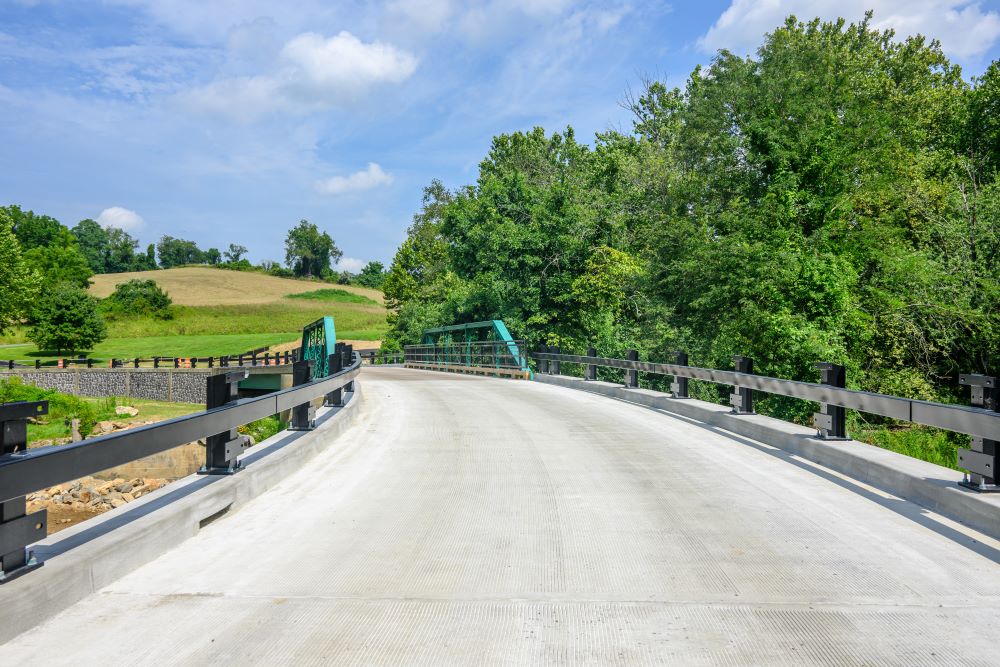
**Steel Bridge Rail**: Tubular steel and structural steel bridge rail systems for applications where concrete rail is too heavy or where aesthetic requirements dictate a lighter profile. Used on pedestrian bridges, rural bridges, and historic bridge rehabilitations. Mounted with anchor bolts into the bridge deck or overhang.
**Combination Rail**: Steel top rail mounted on a concrete parapet — combining the structural performance of concrete with the openness and sight distance of steel upper elements. Common on urban bridges where aesthetics and safety both matter.
**Rail Retrofit and Upgrade**: Many bridge rails installed before MASH testing standards do not meet current performance requirements. We perform bridge rail upgrades that strengthen existing rails to current standards, including concrete parapet height increases, steel rail additions, and anchor bolt upgrades. RailCo LLC specializes in bridge rail installation and retrofit work across Idaho and the Northwest — their project portfolio includes the US-12 Arrow Bridge, Lucky Peak High Bridge, and the Cloverdale Bridge in Ada County. Retrofit work requires careful structural analysis to avoid overloading the bridge deck.
Transition Connections
Every bridge rail terminates at the bridge end and must connect to the approach guardrail system. This transition — from rigid bridge rail to semi-rigid approach guardrail to flexible highway guardrail — is one of the most critical details in roadside safety. We install transition hardware per state DOT standard bridge approach drawings, ensuring dimensional accuracy at every connection point.
Structural Coordination
Bridge rail installation requires close coordination with the bridge structural engineer and the general contractor. Rail reinforcing steel must be positioned precisely within the bridge deck overhang, and anchor bolt patterns must align with deck reinforcing. Our project managers attend bridge deck pour planning meetings, verify rebar placement before concrete, and coordinate rail installation timing with the deck curing schedule.
DOT Standards and Testing
Bridge rail systems must meet MASH or NCHRP 350 crash testing standards and be approved by the state DOT for use on their bridge inventory. Test levels for bridge rail are typically TL-4 (standard highway bridges) or TL-5 (bridges in high truck traffic areas). We install systems from the approved products lists of all thirteen state DOTs in our territory and provide material certifications, inspection documentation, and as-built records.
Investment
Bridge rail work is typically bid as part of a bridge construction or rehabilitation project. Concrete bridge rail ranges from $120 to $250 per linear foot depending on profile, height, and bridge geometry. Steel bridge rail ranges from $180 to $350 per linear foot. Retrofit and upgrade costs vary widely based on existing conditions and the scope of structural modifications required.
Ready to Start Your Project?
Get a free, no-obligation quote from our team of commercial fencing and guardrail experts.
Key Features
- Cast-in-place and precast concrete bridge rail
- Steel tubular and structural bridge rail systems
- Combination concrete-and-steel rail profiles
- MASH TL-4 and TL-5 tested systems
- Bridge rail retrofit and upgrade services
- Precision transition connections to approach guardrail
- Coordination with bridge deck pours and structural work
- Material certifications and as-built documentation
Applications
Technical Specifications
| Concrete Profiles | New Jersey, F-shape, single-slope, vertical |
| Rail Height | 32 inches (TL-4) to 42 inches (TL-5) |
| Steel Rail | HSS tube or W-section per design |
| Test Level | MASH TL-4 (standard) or TL-5 (high truck traffic) |
| Concrete Strength | 4,000 to 5,000 psi at 28 days |
| Anchor Bolts | Per structural engineer design |
Related Services
W-Beam Guardrail
MASH and NCHRP 350 compliant W-beam guardrail for highways, interchanges, and roadside hazard protection.
Box Beam Guardrail
Heavy-duty box beam guardrail for bridge approaches, high-risk curves, and locations requiring increased structural capacity.
Impact Attenuators
MASH-tested crash cushions, sand barrels, and water-filled attenuators for highway gore areas, bridge piers, and fixed hazards.
Frequently Asked Questions
Request a Free Quote
We'll review your project and respond within 2 business hours.